Email this article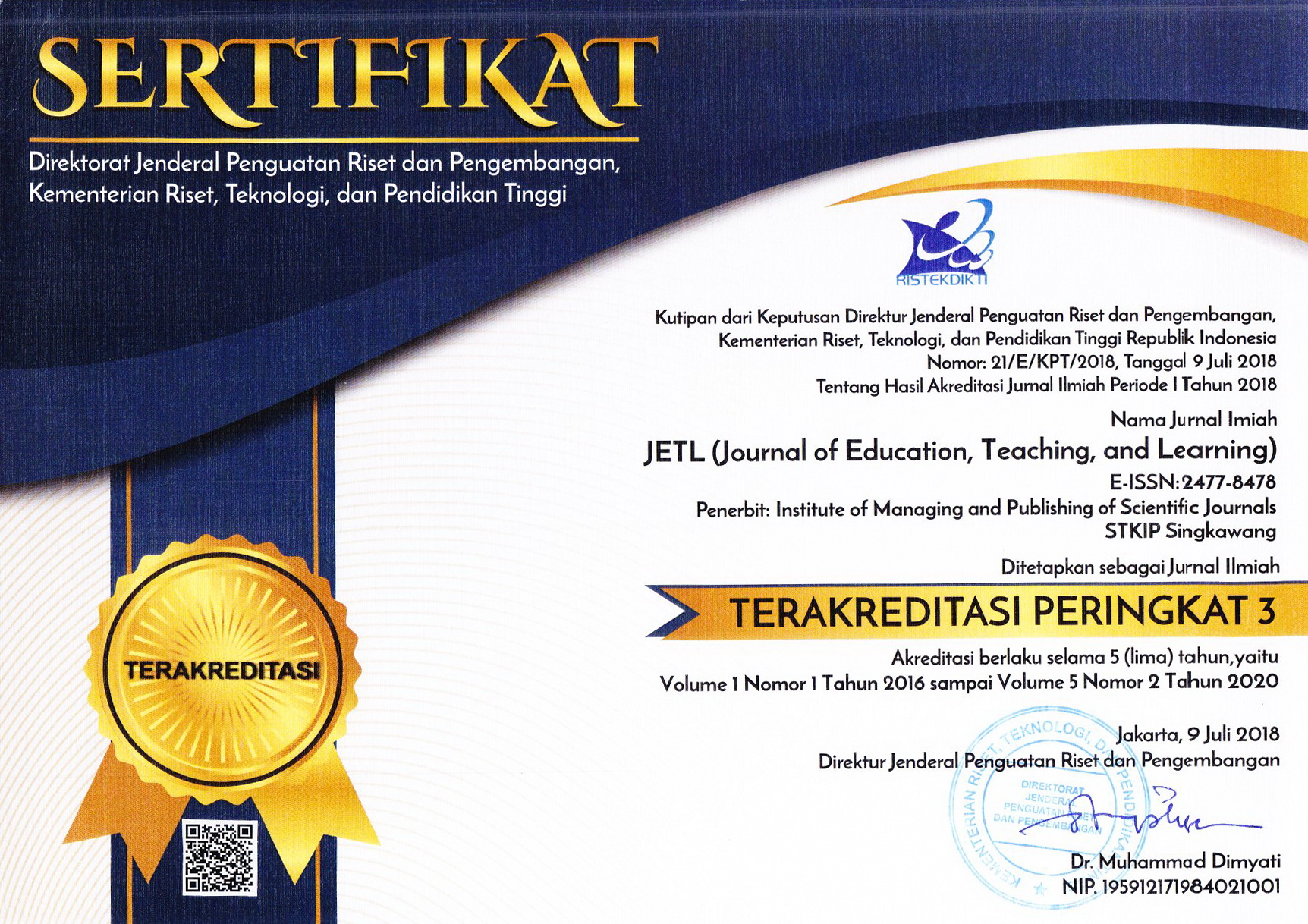


Lecturer Competency Development Based on Continuous Professional Development using Borg & Gall and ADDIE Model
Abstract
As educators and researchers, lecturers do not merely serve as conveyors of knowledge, but also as learning facilitators, innovators, and student mentors. Advances in science and technology, along with the increasingly dynamic demands of the workforce, require lecturers to continuously develop their competencies in a systematic and sustainable manner. The challenges faced in the era of globalization include rapid access to information and the digital technology revolution, as well as the need for graduates who are adaptable, creative, and competitive in the global market. Therefore, it is essential to continuously update their knowledge and academic competencies to keep pace with advancements in science and technology. Similarly, this applies to the curriculum, regulations, and standards of higher education; the need for faculty career development; and the strengthening of universities’ roles in society as knowledge brokers. Professionally competent and continuously developing faculty members strengthen their capacity to solve problems and collaborate with stakeholders. The research question is: What are the competencies of faculty members in professional development that is sustainable? The research objective is to determine the competencies of faculty members based on professional development that is sustainable, with a 90% success rate based on the BKD report each semester. Research methods: the Borg & Gall model and the ADDIE model
Keywords
Full Text:
PDFReferences
Billett, S. (2011). Learning through practice: Models,
traditions, orientations and
approaches. Springer Science & Business
Boyer, E. L. (1990). Scholarship Reconsidered: Priorities of
the Professoriate. Princeton:
Carnegie Foundation
Borg, W. R., & Gall, M. D. (1983). Educational Research:
An Introduction. New York:
Longman.
Cervero, R. M., & Gaines, J. K. (2015). The impact of
professional development on
professional practice: Results from a systematic review. Journal of Continuing Education in the Health Professions, 35(2), 123–134.
Donald Schon (1983). The Reflective Practitioner. Basic
Books
Desimone, L. M. (2009). Improving impact studies of
teachers’ professional development:
Toward better conceptualizations and measures. Educational Researcher, 38(3), 181–199.
Directorate General of Higher Education. (Guidelines for
Lecturer Development and the
Program for the Improvement of Basic
Instructional Skills/PEKERTI).
Directorate General of Higher Education (Dikti), (2019).
Guidelines for Lecturer Workload
(BKD)
Eraut, M. (2004). Informal learning in the workplace.
Studies in Continuing Education,
(2), 247–273.
Etienne Wenger (1998). Communities of Practice:
Learning, Meaning, and Identity.
Cambridge University Press
European Commission. (2013). Supporting the Teaching
Professions for Better Learning
Outcomes.
Kennedy, A. (2014). Understanding continuing professional
development: The need for
theory to impact on policy and practice. Professional Development in Education, 40(5), 688–697.
Ministry of Education and Culture of the Republic of
Indonesia. (2017). Guidelines for
Teachers’ Continuing Professional Development (CPD). Jakarta: Ministry of Education and Culture.
Ministry of Health of the Republic of Indonesia. (2020).
Guidelines for Health Workers’ Continuing
Professional Development. Jakarta: Ministry of Health.
Ministry of Education, Culture, Research, and Technology
of the Republic of Indonesia.
(Regulation of the Minister of State Apparatus Reform and Bureaucracy No. 16 of 2009 on Functional Teaching Positions and Credit Points).
Richey, R. C., & Tessmer, M. (1997). Instructional Design
and Development: A Review of
the Field. New York: Syracuse University.
Regulation of the Minister of National Education No. 16 of
Republic of Indonesia. (2005). Law No. 14 of 2005 on
Teachers and Lecturers and the Ministry of Education and Culture. (2020). Permendikbud No. 3 of 2020
concerning SN-Dikti
Sugiyono. (2017). Metode Penelitian dan Pengembangan
(Research and Development /
R&D). Bandung: Alfabeta
Sugiyono. (2017). Research and Development Methods
(Research and Development /
R&D). Bandung: Alfabeta
Spencer & Spencer dalam buku Competence at Work (1993
Seels, B. B., & Richey, R. C. (1994). Instructional
Technology: The Definition and Domains
of the Field. Washington, DC: AECT.
Salas, E., Tannenbaum, S. I., Kraiger, K., & Smith-Jentsch, K. A. (2012). The science of
training and development in organizations: What matters in practice. Psychological Science in the Public Interest, 13(2), 74–101.
UNESCO. (2015). Rethinking Education: Towards a Global
Common Good? Paris: UNESCO Publishing.
Organisation for Economic Co-operation and Development. (2019). TALIS 2018 Results
(Volume I): Teachers and School Leaders as Lifelong Learners. Paris: OECD Publishing.
Organisation for Economic Co-operation and Development
(2013). Teaching and Learning
International Survey (TALIS) 2013 Results
Organisation for Economic Co-operation and Development. (2009). Creating Effective
Teaching and Learning Environments (TALIS). Paris: OECD Publishing.
UNESCO. (2018). ICT Competency Framework for
Teachers.
UNESCO. (2015). Teacher Policy Development Guide.
Paris: UNESCO.
UNESCO (2015). Rethinking Education: Towards a Global
Common Good?International Labour Organization (2010). A Skilled Workforce for Strong, Sustainable and Balanced Growth
DOI: http://dx.doi.org/10.26737/jetl.v10i2.8975
Refbacks
- There are currently no refbacks.


This work is licensed under a Creative Commons Attribution-NonCommercial 4.0 International License.
Published by:
Institute of Managing and Publishing of Scientific Journals STKIP Singkawang
Sekolah Tinggi Keguruan dan Ilmu Pendidikan (STKIP) Singkawang
Address : STKIP Singkawang, Jalan STKIP - Kelurahan Naram Singkawang, Kalimantan Barat, INDONESIA, 79251
No. Telp. : +62562 420 0344
No. Fax. : +62562 420 0584
JETL (Journal of Education, Teaching, and Learning)
e-ISSN : 2477-8478
p-ISSN : 2477-5924

Editor in Chief Contact: [email protected] / Wa: +6285245101122
Publisher Contact: [email protected] / Wa: +6281217024040/+6285750845033
Management Tools



JETL Indexed by: