Email this article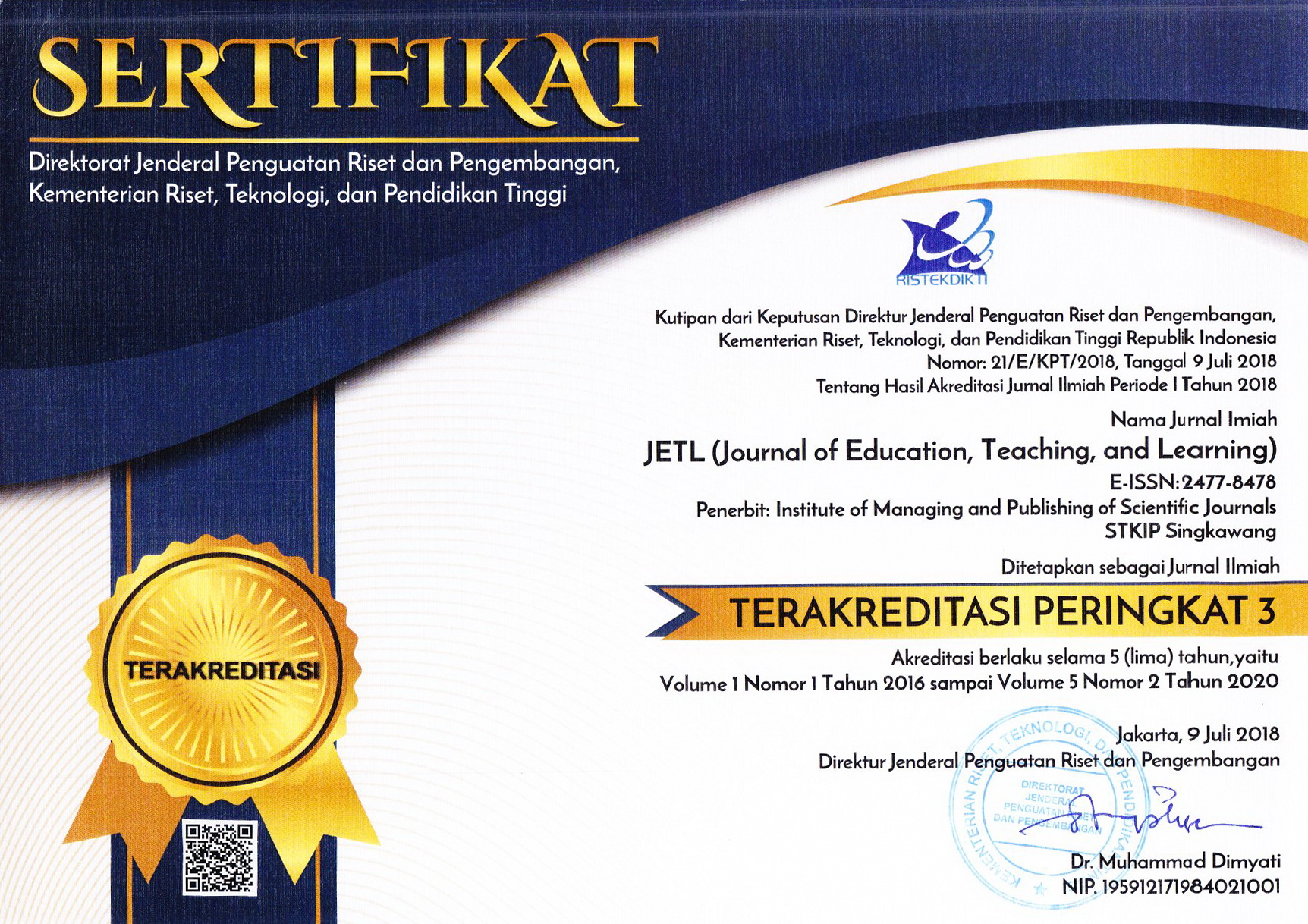


The impact of transformational leadership, entrepreneurial behavior, and self-efficacy on performance: The mediating role of affective commitment
Abstract
Keywords
Full Text:
PDFReferences
Agarwal, R. N. (2015). Stress, job satisfaction and job commitment‘s relation with attrition with special reference to Indian IT sector. Management and Innovation for Competitive Advantage.
Alwisol. (2018). Personality Psychology. Malang: Publisher University of Muhammadiyah Malang.
Ammons, D. (2014). Municipal benchmarks: Assessing local performance and establishing community standards. Routledge.
Bagozzi, R. P., Fornell, C., & Larcker, D. F. (1981). Canonical correlation analysis as a special case of a structural relations model. Multivariate Behavioral Research, 16(4), 437–454.
Bass, B. M., & Riggio, R. E. (2006). Transformational leadership second edition. New Jersey London: Lowrence Erlbaum Associates Publisher.
Bouhalleb, A., & Haddoud, M. Y. (2024). The paths leading to harmonious and obsessive entrepreneurial passion. Journal of Small Business Management, 62(6), 2906–2934.
Buil, I., Martínez, E., & Matute, J. (2019). Transformational leadership and employee performance: The role of identification, engagement and proactive personality. International Journal of Hospitality Management, 77, 64–75.
Caprara, G. V., Barbaranelli, C., Steca, P., & Malone, P. S. (2006). Teachers’ self-efficacy beliefs as determinants of job satisfaction and students’ academic achievement: A study at the school level. Journal of School Psychology, 44(6), 473–490.
Cooper, D. R., Schindler, P. S., & Sihombing, D. (2006). Metode riset bisnis, volume 1, edisi 9/Doland R. Copper; Pamela S. Schindler.
Fisher, G. (2012). Effectuation, causation, and bricolage: A behavioral comparison of emerging theories in entrepreneurship research. Entrepreneurship Theory and Practice, 36(5), 1019–1051.
García-Morales, V. J., Jiménez-Barrionuevo, M. M., & Gutiérrez-Gutiérrez, L. (2012). Transformational leadership influence on organizational performance through organizational learning and innovation. Journal of Business Research, 65(7), 1040–1050.
Getachew, D. S., & Zhou, E. (2018). The influences of transformational leadership on collective efficacy: The moderating role of perceived organizational support. International Journal of Organizational Innovation, 10(4), 7–15.
Ghozali, I., & Latan, H. (2015). Partial Least Squares Konsep Teknik dan Aplikasi dengan Program Smart PLS 3.0. Semarang: Universitas Diponegoro Semarang.
Hair, J. F., Henseler, J., Dijkstra, T. K., & Sarstedt, M. (2014). Common beliefs and reality about partial least squares: comments on Rönkkö and Evermann.
Hair, J. F., Ringle, C. M., & Sarstedt, M. (2011). PLS-SEM: Indeed a silver bullet. Journal of Marketing Theory and Practice, 19(2), 139–152.
Haque, A., Fernando, M., & Caputi, P. (2019). The relationship between responsible leadership and organisational commitment and the mediating effect of employee turnover intentions: An empirical study with Australian employees. Journal of Business Ethics, 156, 759–774.
Hartmann, L. C., & Bambacas, M. (2000). Organizational commitment: A multi method scale analysis and test of effects. The International Journal of Organizational Analysis, 8(1), 89–108.
Henseler, J. (2010). On the convergence of the partial least squares path modeling algorithm. Computational Statistics, 25, 107–120.
Hu, L., & Bentler, P. M. (1999). Cutoff criteria for fit indexes in covariance structure analysis: Conventional criteria versus new alternatives. Structural Equation Modeling: A Multidisciplinary Journal, 6(1), 1–55.
Hubbard, G. (2009). Measuring organizational performance: beyond the triple bottom line. Business Strategy and the Environment, 18(3), 177–191.
Judge, T. A., Jackson, C. L., Shaw, J. C., Scott, B. A., & Rich, B. L. (2007). Self-efficacy and work-related performance: the integral role of individual differences. Journal of Applied Psychology, 92(1), 107.
Katz, M. R., Rodin, G., & Devins, G. M. (1995). Self-esteem and cancer: theory and research. The Canadian Journal of Psychiatry, 40(10), 608–615.
Klassen, R. M., & Tze, V. M. C. (2014). Teachers’ self-efficacy, personality, and teaching effectiveness: A meta-analysis. Educational Research Review, 12, 59–76.
Kuratko, D. F., Ireland, R. D., Covin, J. G., & Hornsby, J. S. (2005). A model of middle–level managers’ entrepreneurial behavior. Entrepreneurship Theory and Practice, 29(6), 699–716.
Kurniawan, A., Loekito, L., & Solimun, S. (2016). Power of test path analysis and partial least square analysis. CAUCHY: Jurnal Matematika Murni Dan Aplikasi, 4(3), 112–114.
Mercurio, Z. A. (2015). Affective commitment as a core essence of organizational commitment: An integrative literature review. Human Resource Development Review, 14(4), 389–414.
Meyer, J. P., Stanley, D. J., Herscovitch, L., & Topolnytsky, L. (2002). Affective, continuance, and normative commitment to the organization: A meta-analysis of antecedents, correlates, and consequences. Journal of Vocational Behavior, 61(1), 20–52.
Mintzberg, H. (2009a). 29 Days of Managing (URL): Supplement to MANAGING by Henry Mintzberg. Pearson.
Mintzberg, H. (2009b). Rebuilding companies as communities. Harvard Business Review, 87(7/8), 140–143.
Naderi, A., Nasrolahi Vosta, L., Ebrahimi, A., & Jalilvand, M. R. (2019). The contributions of social entrepreneurship and transformational leadership to performance: Insights from rural tourism in Iran. International Journal of Sociology and Social Policy, 39(9/10), 719–737.
Olejnik, S., & Algina, J. (2000). Measures of effect size for comparative studies: Applications, interpretations, and limitations. Contemporary Educational Psychology, 25(3), 241–286.
Pryor, M. G., & Taneja, S. (2010). Henri Fayol, practitioner and theoretician–revered and reviled. Journal of Management History, 16(4), 489–503.
Rauch, A., Wiklund, J., Lumpkin, G. T., & Frese, M. (2009). Entrepreneurial orientation and business performance: An assessment of past research and suggestions for the future. Entrepreneurship Theory and Practice, 33(3), 761–787.
Schoemmel, K., & S. Jønsson, T. (2014). Multiple affective commitments: quitting intentions and job performance. Employee Relations, 36(5), 516–534.
Sugiyono, D. (2013). Metode penelitian pendidikan pendekatan kuantitatif, kualitatif dan R&D.
Tjahjono, H. K., Prasetyo, F., & Palupi, M. (2018). Kepemimpinan transformasional pada organizational citizenship behavior dan komitmen afektif. Jurnal Manajemen Dan Pemasaran Jasa, 11(2), 217–232.
Ulum, I., Ghozali, I., & Purwanto, A. (2014). Konstruksi model pengukuran kinerja dan kerangka kerja pengungkapan modal intelektual. Jurnal Akuntansi Multiparadigma, 5(3), 380–392.
Zee, M., & Koomen, H. M. Y. (2016). Teacher self-efficacy and its effects on classroom processes, student academic adjustment, and teacher well-being: A synthesis of 40 years of research. Review of Educational Research, 86(4), 981–1015.
Zhu, W., Avolio, B. J., & Walumbwa, F. O. (2009). Moderating role of follower characteristics with transformational leadership and follower work engagement. Group & Organization Management, 34(5), 590–619.
DOI: http://dx.doi.org/10.26737/jetl.v10i2.8733
Refbacks
- There are currently no refbacks.


This work is licensed under a Creative Commons Attribution-NonCommercial 4.0 International License.
Published by:
Institute of Managing and Publishing of Scientific Journals STKIP Singkawang
Sekolah Tinggi Keguruan dan Ilmu Pendidikan (STKIP) Singkawang
Address : STKIP Singkawang, Jalan STKIP - Kelurahan Naram Singkawang, Kalimantan Barat, INDONESIA, 79251
No. Telp. : +62562 420 0344
No. Fax. : +62562 420 0584
JETL (Journal of Education, Teaching, and Learning)
e-ISSN : 2477-8478
p-ISSN : 2477-5924

Editor in Chief Contact: [email protected] / Wa: +6285245101122
Publisher Contact: [email protected] / Wa: +6281217024040/+6285750845033
Management Tools



JETL Indexed by: